

Showing posts with label behavior. Show all posts
Showing posts with label behavior. Show all posts
December 01, 2014
High-fructose diet in adolescence may exacerbate depressive-like behavior


December 09, 2013
Aging and gene expression -- possible links to autism and schizophrenia in offspring

December 03, 2013
Brain connectivity study reveals striking differences between men and women

April 21, 2013
Brain scans might predict future criminal behavior
 Low anterior cingulate activity linked to repeat offenses
ALBUQUERQUE, NM and DURHAM, NC--A new study conducted by The Mind Research Network in Albuquerque, N.M., shows that neuroimaging data can predict the likelihood of whether a criminal will reoffend following release from prison.
The paper, which is to be published in the Proceedings of the National Academy of Sciences, studied impulsive and antisocial behavior and centered on the anterior cingulate cortex (ACC), a portion of the brain that deals with regulating behavior and impulsivity.
You can view the paper by clicking here: http://www.pnas.org/cgi/doi/10.1073/pnas.1219302110.
The study demonstrated that inmates with relatively low anterior cingulate activity were twice as likely to reoffend than inmates with high-brain activity in this region.
"These findings have incredibly significant ramifications for the future of how our society deals with criminal justice and offenders," said Dr. Kent A. Kiehl, who was senior author on the study and is director of mobile imaging at MRN and an associate professor of psychology at the University of New Mexico. "Not only does this study give us a tool to predict which criminals may reoffend and which ones will not reoffend, it also provides a path forward for steering offenders into more effective targeted therapies to reduce the risk of future criminal activity."
The study looked at 96 adult male criminal offenders aged 20-52 who volunteered to participate in research studies. This study population was followed over a period of up to four years after inmates were released from prison.
"These results point the way toward a promising method of neuroprediction with great practical potential in the legal system," said Dr. Walter Sinnott-Armstrong, Stillman Professor of Practical Ethics in the Philosophy Department and the Kenan Institute for Ethics at Duke University, who collaborated on the study. "Much more work needs to be done, but this line of research could help to make our criminal justice system more effective."
The study used the Mind Research Network's Mobile Magnetic Resonance Imaging (MRI) System to collect neuroimaging data as the inmate volunteers completed a series of mental tests.
"People who reoffended were much more likely to have lower activity in the anterior cingulate cortices than those who had higher functioning ACCs," Kiehl said. "This means we can see on an MRI a part of the brain that might not be working correctly -- giving us a look into who is more likely to demonstrate impulsive and anti-social behavior that leads to re-arrest."
The anterior cingulate cortex of the brain is "associated with error processing, conflict monitoring, response selection, and avoidance learning," according to the paper. People who have this area of the brain damaged have been "shown to produce changes in disinhibition, apathy, and aggressiveness. Indeed, ACC-damaged patients have been classed in the 'acquired psychopathic personality' genre."
Kiehl says he is working on developing treatments that increase activity within the ACC to attempt to treat the high-risk offenders.
###
The four-year study was supported by grants from the National Institute on Drug Abuse (NIDA), the National Institute of Mental Health (NIMH), and pilot funds by the John D. and Catherine T. MacArthur Foundation Law and Neuroscience Project. The study was conducted in collaboration with the New Mexico Corrections Department.
ABOUT THE MIND RESEARCH NETWORK
The Mind Research Network (MRN), headquartered in Albuquerque, N.M., is committed to advancing the diagnosis and treatment of mental illness and other brain disorders. MRN is a 501(c)3 non-profit organization consisting of an interdisciplinary association of scientists located at universities, national laboratories and research centers around the world and is focused on imaging technology and its emergence as an integral element of neuroscience investigation.
The Mind Research Network is a part of the Lovelace Respiratory Research Institute family of companies Professional Counselor Continuing Education
Learn more at http://www.mrn.org
Low anterior cingulate activity linked to repeat offenses
ALBUQUERQUE, NM and DURHAM, NC--A new study conducted by The Mind Research Network in Albuquerque, N.M., shows that neuroimaging data can predict the likelihood of whether a criminal will reoffend following release from prison.
The paper, which is to be published in the Proceedings of the National Academy of Sciences, studied impulsive and antisocial behavior and centered on the anterior cingulate cortex (ACC), a portion of the brain that deals with regulating behavior and impulsivity.
You can view the paper by clicking here: http://www.pnas.org/cgi/doi/10.1073/pnas.1219302110.
The study demonstrated that inmates with relatively low anterior cingulate activity were twice as likely to reoffend than inmates with high-brain activity in this region.
"These findings have incredibly significant ramifications for the future of how our society deals with criminal justice and offenders," said Dr. Kent A. Kiehl, who was senior author on the study and is director of mobile imaging at MRN and an associate professor of psychology at the University of New Mexico. "Not only does this study give us a tool to predict which criminals may reoffend and which ones will not reoffend, it also provides a path forward for steering offenders into more effective targeted therapies to reduce the risk of future criminal activity."
The study looked at 96 adult male criminal offenders aged 20-52 who volunteered to participate in research studies. This study population was followed over a period of up to four years after inmates were released from prison.
"These results point the way toward a promising method of neuroprediction with great practical potential in the legal system," said Dr. Walter Sinnott-Armstrong, Stillman Professor of Practical Ethics in the Philosophy Department and the Kenan Institute for Ethics at Duke University, who collaborated on the study. "Much more work needs to be done, but this line of research could help to make our criminal justice system more effective."
The study used the Mind Research Network's Mobile Magnetic Resonance Imaging (MRI) System to collect neuroimaging data as the inmate volunteers completed a series of mental tests.
"People who reoffended were much more likely to have lower activity in the anterior cingulate cortices than those who had higher functioning ACCs," Kiehl said. "This means we can see on an MRI a part of the brain that might not be working correctly -- giving us a look into who is more likely to demonstrate impulsive and anti-social behavior that leads to re-arrest."
The anterior cingulate cortex of the brain is "associated with error processing, conflict monitoring, response selection, and avoidance learning," according to the paper. People who have this area of the brain damaged have been "shown to produce changes in disinhibition, apathy, and aggressiveness. Indeed, ACC-damaged patients have been classed in the 'acquired psychopathic personality' genre."
Kiehl says he is working on developing treatments that increase activity within the ACC to attempt to treat the high-risk offenders.
###
The four-year study was supported by grants from the National Institute on Drug Abuse (NIDA), the National Institute of Mental Health (NIMH), and pilot funds by the John D. and Catherine T. MacArthur Foundation Law and Neuroscience Project. The study was conducted in collaboration with the New Mexico Corrections Department.
ABOUT THE MIND RESEARCH NETWORK
The Mind Research Network (MRN), headquartered in Albuquerque, N.M., is committed to advancing the diagnosis and treatment of mental illness and other brain disorders. MRN is a 501(c)3 non-profit organization consisting of an interdisciplinary association of scientists located at universities, national laboratories and research centers around the world and is focused on imaging technology and its emergence as an integral element of neuroscience investigation.
The Mind Research Network is a part of the Lovelace Respiratory Research Institute family of companies Professional Counselor Continuing Education
Learn more at http://www.mrn.org
November 28, 2012
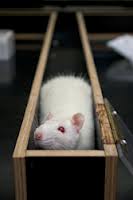
Switching Off a Specific Brain Region Can Alter Ingrained Habits in Rats
October 23, 2012
School-wide interventions improve student behavior
An analysis of a school behavior strategy—known as School-Wide Positive Behavioral Interventions and Supports (SWPBIS)—found that these types of programs significantly reduced children's aggressive behaviors and office discipline referrals, as well as improved problems with concentration and emotional regulation. The study, conducted by researchers from the Johns Hopkins Bloomberg School of Public Health, is the first randomized control trial to examine the impact of SWPBIS programs over multiple school years. The results were published October 15 in the journal Pediatrics as an eFirst publication.SWPBIS is a prevention strategy that aims to alter student behavior by setting universal, positively stated expectations for student behavior that are implemented across the entire school. Policies and decisions related to student behaviors are based on data analysis. SWPBIS programs are used in more than 16,000 schools in the U.S."These findings are very exciting, given the wide use of SWPBIS across the country. These results are among the first to document significant impacts of the program on children's problem behaviors, as well as positive behaviors, across multiple years as a result of SWPBIS," said Catherine P. Bradshaw, PhD, MEd, lead author of the study and associate professor in the Bloomberg School's Department of Mental Health.The randomized trial included a representative sample of 12,344 elementary school children from 37 schools. Approximately half of the students received free or reduced-priced meals, and nearly 13 percent received special education services. The researchers analyzed teachers' ratings of students' behavior and concentration problems, social-emotional functioning, pro-social behavior, office discipline referrals, and suspension over 4 school years.Overall, the study found significant improvement in children's behavior problems, concentration problems, social-emotional functioning, and pro-social behavior in schools using SWPBIS. Children in SWPBIS schools also were 33 percent less likely to receive an office discipline referral than those in the comparison schools. The effects tended to be strongest among children who were first exposed to SWPBIS in kindergarten."A unique feature of the model is the overall structure that is formed in schools to support sustainable services for students across a range of behavioral needs LCSW Continuing Education Using this framework, school staff can identify students at greatest need of services and efficiently target programs and resources to them," said Bradshaw.###The author of "Effects of School-Wide Positive Behavioral Interventions and Supports on Child Behavior Problems" include Catherine Bradshaw, PhD, MEd; Tracy E. Waasdorp, PhD, MEd; and Philip J. Leaf, PhD.

September 03, 2012
Daily or Severe Tantrums May Point to Mental Health Issues

Subscribe to:
Posts (Atom)
